 November 23 2026
TMT Bar Storage At Construction Sites: How To Prevent Rust, Damage and Material Waste
A truck rolls in on Monday, and the bars get dumped near the gate. Tuesday brings rain. By Friday, there’s mud on the bundle, one end is bent where a loader nudged it, and nobody can say which pile is 12 mm and which is 16 mm. Sound painfully familiar? Plenty of sites lose money this way, and the TMT steel bars haven’t even reached the formwork yet.
Store TMT bars at least 150 mm above ground on sleepers or racks, cover them from rain, and stack them by size and grade to prevent rust and damage. It’s simple, and it’s still the step most often skipped. At Kamdhenu, we’d rather you spend a little time on storage than lose good bars to it, so here’s a practical guide for your site.
What Poor Storage Really Costs
Steel doesn’t fail loudly in a storage yard. It loses quality quietly. Rust builds up, bars bend, lots get mixed, and by the time the problem shows, it’s already waste. Even TMT bars for construction that left the mill in perfect condition can end up cleaned, cut short, or set aside.
|
Storage mistake |
What it leads to |
Simple fix |
|
Bars lying on bare soil |
Moisture, mud and faster rusting |
Raise them at least 150 mm on sleepers or racks |
|
No cover |
Rain and dirt on the bars |
Tarpaulin or polythene, or a covered shed |
|
Sizes and grades mixed |
Wrong bar picked, extra cutting waste |
Separate, labelled stacks |
|
Rough unloading |
Bent bars, damaged surfaces |
Lift them, don’t drag or drop |
|
Weak support |
Sagging and bending |
Place supports closer together |
Set Up the Storage Area Before the Delivery Arrives
Pick Firm, Well-Drained Ground
Choose a spot where water won’t pool. A hard platform works well, and it helps to follow IS 4082:1996, the Indian Standard that gives recommendations for stacking and storing construction materials at site.
Lift the Bars Off the Ground
Both soil and concrete hold moisture, so bars shouldn’t touch either. Rest them on sleepers, racks, or wooden pallets at least 150 mm above ground. Keep the supports close enough that the bars don’t sag. Non-metallic supports like timber or concrete sleepers are a common choice.
Cover Them Properly
Tarpaulin or polythene over the stack keeps off rain and splashes. If bars will wait for weeks, a covered shed is better. In humid or coastal areas, keep them well raised too.
Stack Smart to Cut Damage and Waste
A tidy yard saves more steel than most people expect.
- Store bars separately by size, grade and length.
- Label every stack so grade and size are easy to see.
- Paint the ends of each class in a different colour if that helps your team.
- Use earlier deliveries first.
- Lift, don’t drag. A single dragged TMT rod can pick up mud along its whole length, and rough handling or dropping can damage bars.
With Kamdhenu Nxt, identification is built in: a stamp on every metre of the bar, a red strip tag on each bundle and a QR code on the strip or tag. Those marks make it easier to keep lots sorted and to confirm what you received. Long storage is especially common on high-rise projects, where floors are poured one after another and bar deliveries arrive in stages, so a proper yard pays for itself.
Rust: Know What’s Harmless and What Isn’t
Not every orange tinge is a crisis. Here’s a simple way to read what you see:
|
What you see |
What it generally means |
What to do |
|
Thin surface film or mill scale that doesn’t flake |
Common on stored bars |
Usually acceptable; confirm with your site engineer |
|
Loose, flaking rust, mud, oil or grease |
Weakens the grip with concrete |
Clean it off before placing bars in the formwork |
|
Deep pitting |
The bar’s section may be reduced |
Set the bar aside and ask the engineer |
For bars that will wait a long time, many site guidelines suggest a coat of cement wash as extra protection. Before every pour, walk the stack and check your TMT rebars for loose rust, mud, and oil, because those are the things that hurt the bond between steel and concrete.
Where Kamdhenu Nxt Comes In
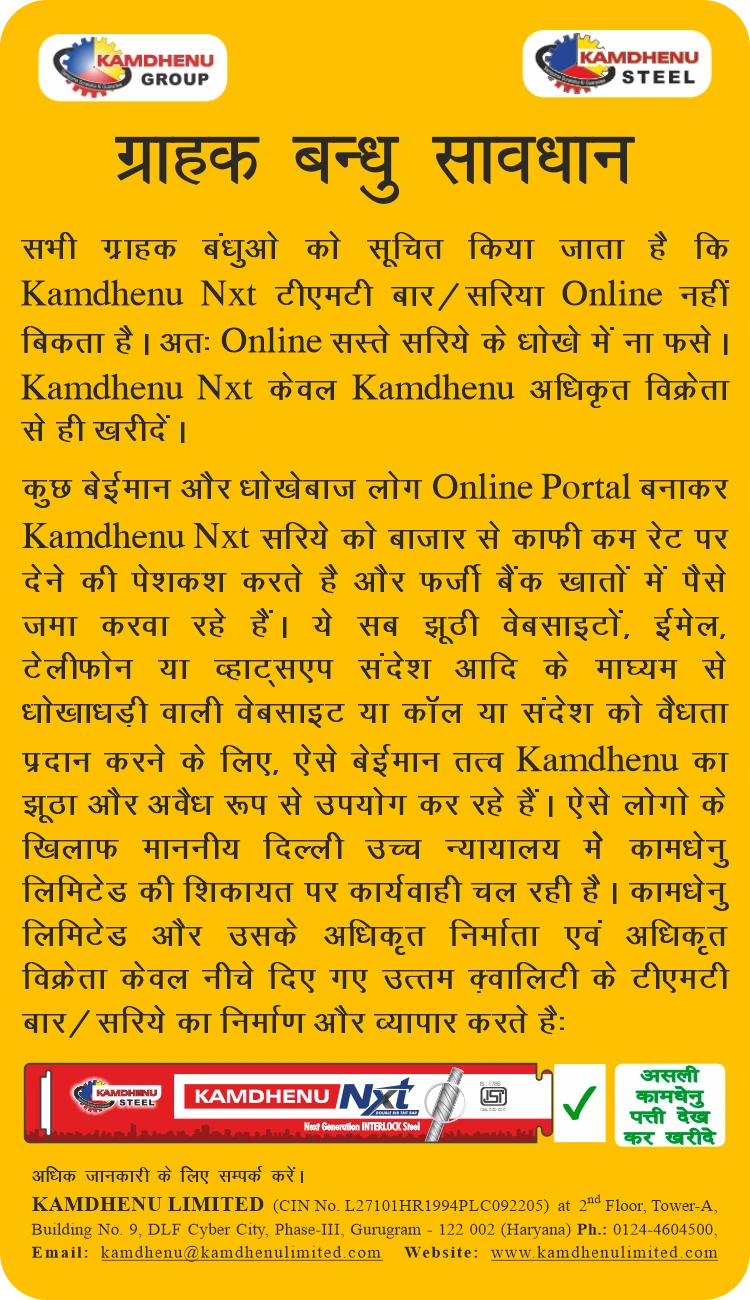
Our Kamdhenu Nxt page highlights corrosion resistance, and the range comes in Fe-500, Fe-550, Fe-500D and Fe-550D grades, in sizes from 8 mm to 32 mm. Good bars still deserve good storage, though. Think of it as protecting the quality we build in at the mill. Keep the test certificate with your delivery records, and buy only from authorised dealers.
A Quick Site Checklist
- Is the ground firm and well-drained?
- Are bars at least 150 mm above ground and well supported?
- Are they covered, or in a shed?
- Are sizes and grades in separate, labelled stacks?
- Are identification marks and the QR code intact?
- Have you checked for loose rust, mud, and oil before every pour?
Conclusion
Storage looks like the boring part of construction. It isn’t. It’s where TMT steel bars either stay in good shape or quietly start costing you money. Keep them raised, covered, sorted, and handled gently, and even the best quality TMT bars in India will reach your pour in the condition they left the mill.
Need help choosing the right Nxt grade for your project? Talk to us at Kamdhenu.
FAQs
Q. How high above the ground should TMT bars be stored?
Stack them at least 150 mm above ground level on sleepers, racks, or platforms, using supports that are non-metallic and close enough to stop the bars from sagging. This keeps them away from ground moisture.
Q. Should TMT bars be covered at the site?
Yes. Cover them with tarpaulin or polythene sheets to protect them from rain, moisture, and dirt. A covered shed is better still, especially for long storage or humid and coastal locations.
Q. How should different bar sizes and grades be stored?
Keep them separate by size, grade, and length, with clear labels on each stack. This prevents mix-ups, reduces cutting waste, and helps teams pick the right bar quickly for each structural element.
Q. Is light surface rust on TMT bars a problem?
A thin surface film that doesn’t flake is generally treated differently from loose rust, mud, oil, or pitting. Loose material should be cleaned off before concreting, and deep pitting should go to the site engineer.
Q. How can I identify genuine Kamdhenu Nxt bars in storage?
Look for the Kamdhenu Nxt stamp on every metre of the bar, a red Kamdhenu strip tag on each bundle, and the QR code on the strip or tag. Buy only from authorised dealers.
Also Read:-
How TMT Bars and Concrete Work Together To Improve Structural Strength
What Is The TMT Bar Manufacturing Process? From Steel Billets To Finished Reinforcement Bars
More Useful Links:-
MS Tube Suppliers | Steel Construction Company | MS Binding Wire Manufacturer